


.png)
The Complex Design of Ladders in Video Games

Updated: Jul 16
Before its closure, Arkane Austin had a unique philosophy that was humorously encapsulated in one of its design tenets. "Fuck ladders." This sentiment, shared by former studio head Harvey Smith and co-founder Raphael Colantonio, emerged during discussions about game design long before the success of Dishonored. At that time, the studio was underfunded and had ambitions to create games inspired by Thief and Blade Runner.
In an effort to communicate design principles to new hires, Smith humorously transformed the studio’s sayings into motivational posters, which were then displayed around the office. Although the attempts to develop Blade Runner and Thief did not materialize, the team eventually created Dishonored, a beloved first-person assassination game that cleverly replaced ladders with hanging chains.
Over the years, game design has evolved, establishing standards and conventions that dictate how mechanics should function. Smith reflects on how past games often lacked the intricacies we expect today. For example, older titles didn’t even allow for head movement tied to mouse controls. Nowadays, the implementation of ladders in games involves a multitude of design considerations, such as player visibility on ladders and weapon accessibility. The complexity of these elements raises many questions: Can a player slide down a ladder? What happens if they are attacked while climbing? The need for AI to replicate player actions adds to the challenge.
Ladders in early video games, like those in Tom Clancy’s Rainbow Six on the original PlayStation, often became a source of frustration. Players could find themselves inadvertently causing NPCs to harm themselves while handling the se simple structures. The chaos of early ladder mechanics has faded into memory, yet some developers still encounter significant challenges when integrating them into modern gameplay. Liz England, a former lead designer at Ubisoft and Insomniac, shares her own experiences with ladders, noting that they often lead to bugs and gameplay hiccups. She points out the inherent difficulty in making something as commonplace as a door or ladder function smooth within a game environment, as they can break immersion and complicate gameplay flow.
Interestingly, one common design strategy is to limit ladder placement to areas devoid of enemies, creating safe zones for players. However, some developers, like those behind Arc Raiders, subvert these conventions. In Arc Raiders, players encounter a deceptive ladder that only goes halfway down, forcing them to jump off instead of simply descending. This design choice cleverly heightens tension, reminding players that danger is ever-present.
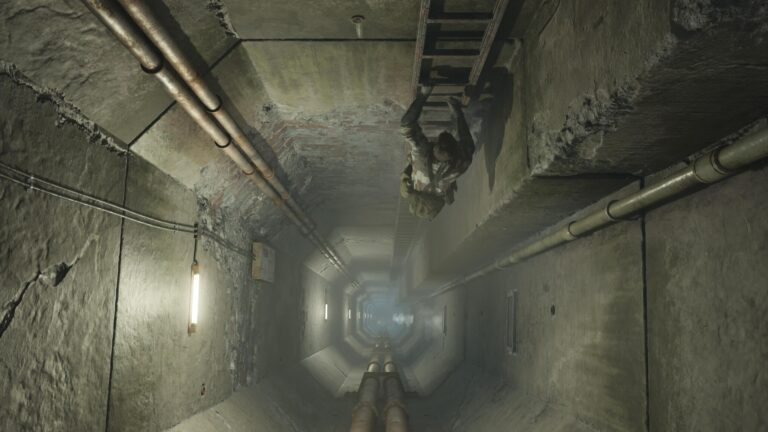
Iconic game designer Hideo Kojima has a long-standing fascination with ladders, particularly evident in Metal Gear Solid 3: Snake Eater, which has an iconic three-minute ladder climb. This sequence is a transition between gameplay elements, accompanied by atmospheric sound design that enhances the experience. Kojima later reimagined ladders in Death Stranding, creating versatile objects that serve multiple purposes, from climbing to bridging gaps. The innovative implementation of ladders in Kojima's games shows how even simple mechanics can significantly impact gameplay and narrative.
Ultimately, the way ladders are designed and utilized in video games reflects broader themes and player experiences, reminding us of the creative possibilities that exist within game mechanics. While ladders may seem trivial, their thoughtful integration can create meaningful gameplay moments that resonate with players.


Comments